
The 4th edition of the Smart Calf Rearing Conference, led by Dr. Lautaro Rostoll-Cangiano and hosted for the first time in the United States at the University of Wisconsin–Madison, brought together a vibrant international community of researchers, producers, veterinarians, and industry professionals dedicated to advancing calf-rearing practices. The scientific sessions, held at the Great Hall of Memorial Union, welcomed approximately 250 participants from North and South America, Europe, and Asia, establishing a global platform for collaboration, knowledge exchange, and innovation in calf health, welfare, and management.
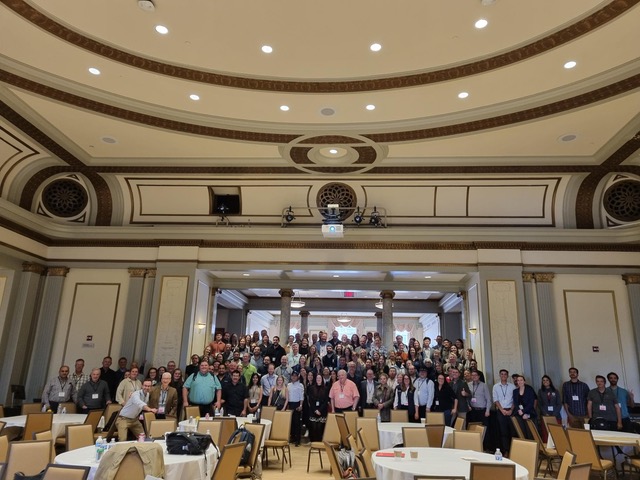
Following two days of cutting-edge presentations on calf nutrition, immune function, disease prevention, and rearing technologies, the conference concluded with a Producer Day at the Arlington Agricultural Research Station. Approximately 150 regional dairy producers, veterinarians, consultants, and farm managers attended this event, which was organized with support from Jennifer Van Os and UW–Madison Extension. Producer Day emphasized the translation of research into practice and featured a panel discussion with three Wisconsin dairy producers, who shared on-farm perspectives and innovations in calf rearing. The day concluded with a tour of UW–Madison’s recently renovated calf-rearing facilities, including demonstrations of a newly installed automated calf feeding system, made possible through an industry equipment donation in collaboration with funding support from the College of Agricultural and Life Sciences (CALS) and the Dairy Innovation Hub.
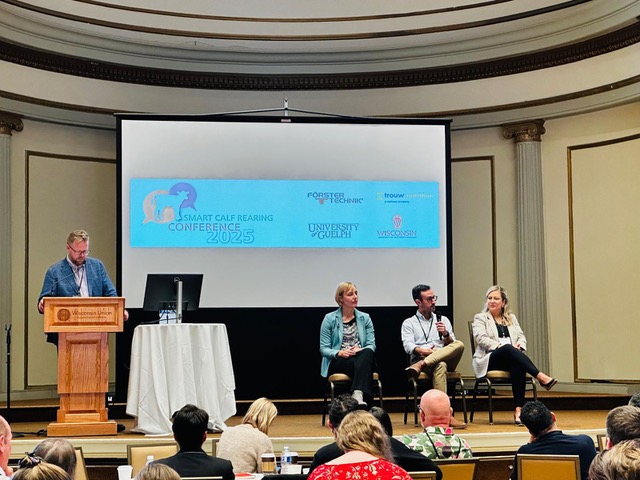
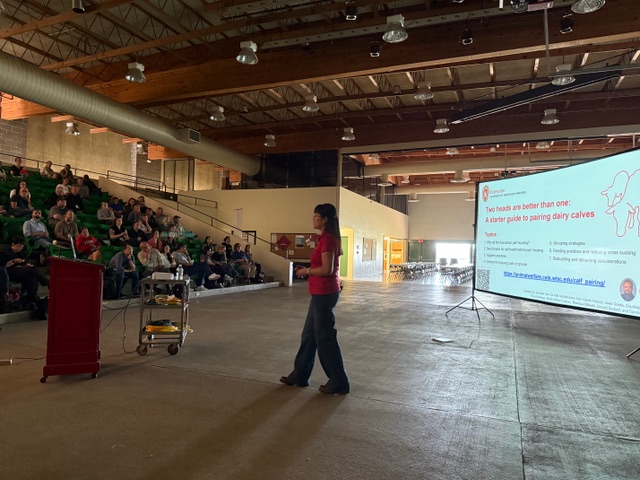
The conference showcased UW–Madison’s research expertise, facilities, and capabilities in calf health, nutrition, and welfare, highlighting the university’s leadership in advancing both scientific understanding and practical solutions for the dairy industry. The combined scientific and producer-focused format strengthened academic-industry partnerships and provided graduate students and early-career scientists with networking and presentation opportunities. As highlighted in the event’s welcome remarks, the conference is as much about building a collaborative community as it is about sharing knowledge, a space where ideas are tested, challenged, and refined to push the global dairy industry forward.
By hosting this international meeting, UW–Madison reaffirmed its role as a hub for innovation, professional development, and translational research in calf health, nutrition, and welfare, ensuring that both scientific discoveries and practical solutions continue to advance productivity, management, and well-being in dairy operations.
